Practical use
Keep pressure on muscle and maintain support for your weight.
Practical use
Keep pressure on muscle and maintain support for your weight.
How it works
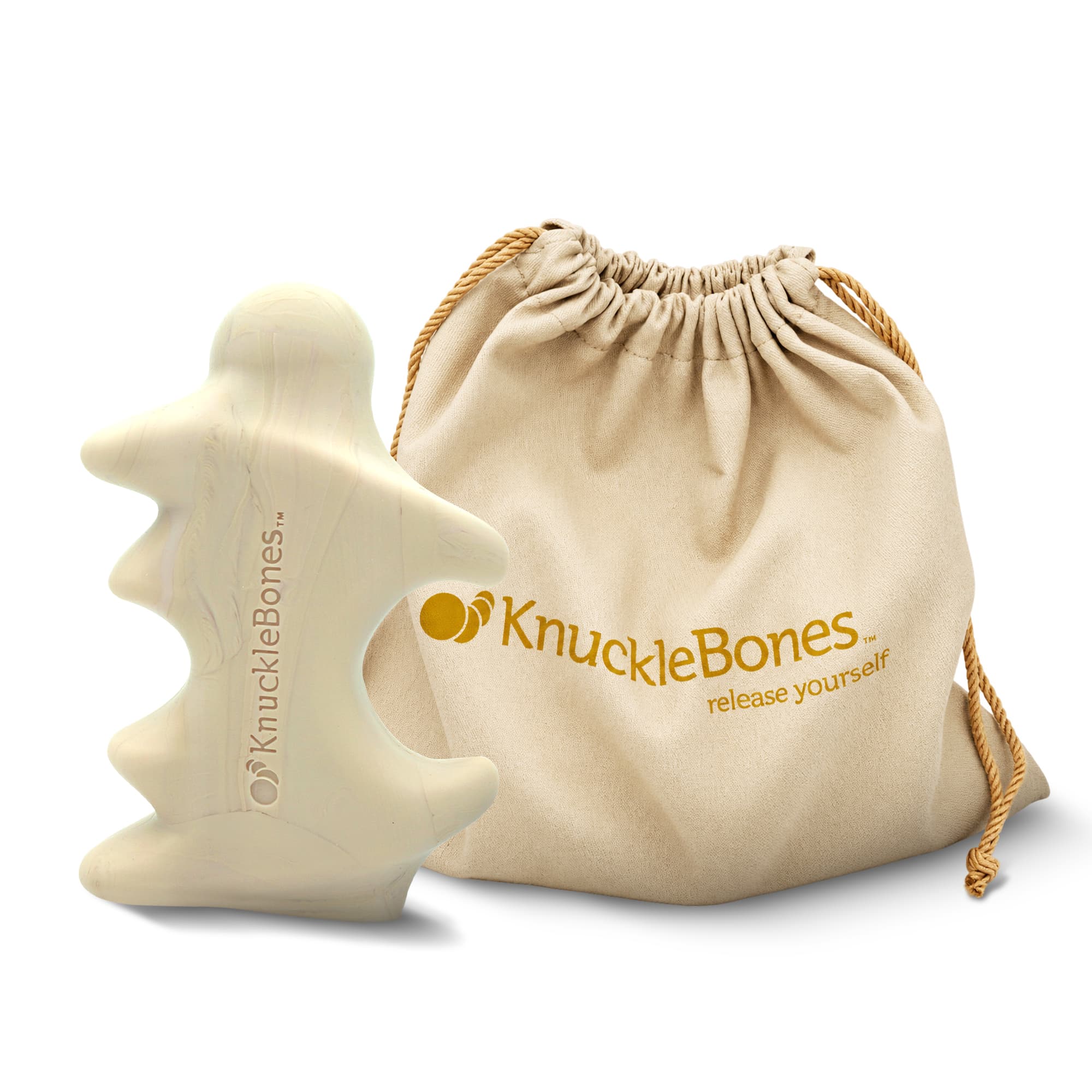
Use the Elbow surface in two ways: stationary for the glutes, or hand-held for light contact on the outer-hip muscles.
Practical use
Keep pressure on muscle and maintain support for your weight.
Practical use
Keep pressure on muscle and maintain support for your weight.
Recommended pressure type
Best starting point for this zone.
Tension around the buttocks and outer hip can feel spread out or concentrated in a small area. Use the different surfaces to vary the contact, not to chase a deeper sensation. Keep pressure on muscle rather than the tailbone, sitting bones or hip joint.
View step-by-step guideHow to use
Choose a comfortable, supported position and follow the setup for the area you are working on. Begin with light contact, keep the pressure comfortable and make sure you can release it easily. Take the pressure off before repositioning.
Stationary Contact for Glutes
Use a stable seat with your feet supported and enough space to adjust comfortably. Keep your hands available for support.
Find the fleshy part of one buttock with your hand. Avoid the tailbone, sitting bone, bony outer hip and hip joint.
Position the Elbow surface beneath the fleshy part of one buttock. Use the seat, your feet and your hands to control how much weight rests on the tool.
Pressure and Outer-Hip Contact
Begin with light contact, then gradually adjust how much weight rests on the stationary tool while the pressure remains comfortable. Ease off before moving it.
Hold the tool upright and use the Elbow end for light contact on the outer-hip muscle. Stay away from the bony point of the hip and the groin.
Take pressure off before moving the tool. Stop if discomfort travels down the leg or you notice tingling or numbness.
Use safely
Begin with light pressure and increase gradually only while it remains comfortable. Stop if you feel sharp or increasing pain, numbness, tingling, dizziness, or unusual weakness.
Common questions
No. Use supported, stationary contact beneath the fleshy part of a buttock for the glutes, and light hand-held contact for the outer-hip muscle. Do not transfer the seated bodyweight setup onto the bony side of the hip.
No. Use the seat, your feet and your hands to control how much weight reaches the contact area. Begin lightly, keep support available and make sure you can take the pressure off easily.
No. Elbow names a contact surface within the KET system, not a required pressure level. Start lightly and keep the contact comfortable whether the tool is stationary or held in your hand.
No. Contact on glute muscle is not a sciatica treatment. Stop if discomfort travels down the leg or you notice tingling or numbness rather than trying to press through those symptoms.
Related zones
Neck & base of skull
Explore neck and skull-base guidance
Upper traps & shoulders
Explore upper trap guidance
Back of arm & outer elbow
Explore arm and outer-elbow guidance
Mid-back
Explore mid-back guidance
Lower back
Explore lower-back guidance
Hamstrings
Explore hamstring guidance
Calves
Explore calf guidance