

Practical use
Support the leg and keep contact on the muscular part of the thigh.
Practical use
Support the leg and keep contact on the muscular part of the thigh.
How it works
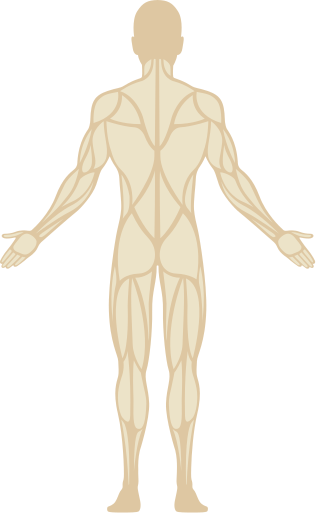
A tight feeling along the back of your thigh can make you want to rub or stretch the whole area. This guide focuses on self-massage over the hamstring muscles, using a supported leg and contact that stays comfortable rather than forcing range or depth.
Practical use
Support the leg and keep contact on the muscular part of the thigh.
Practical use
Support the leg and keep contact on the muscular part of the thigh.
Recommended pressure type
Best starting point for this zone.
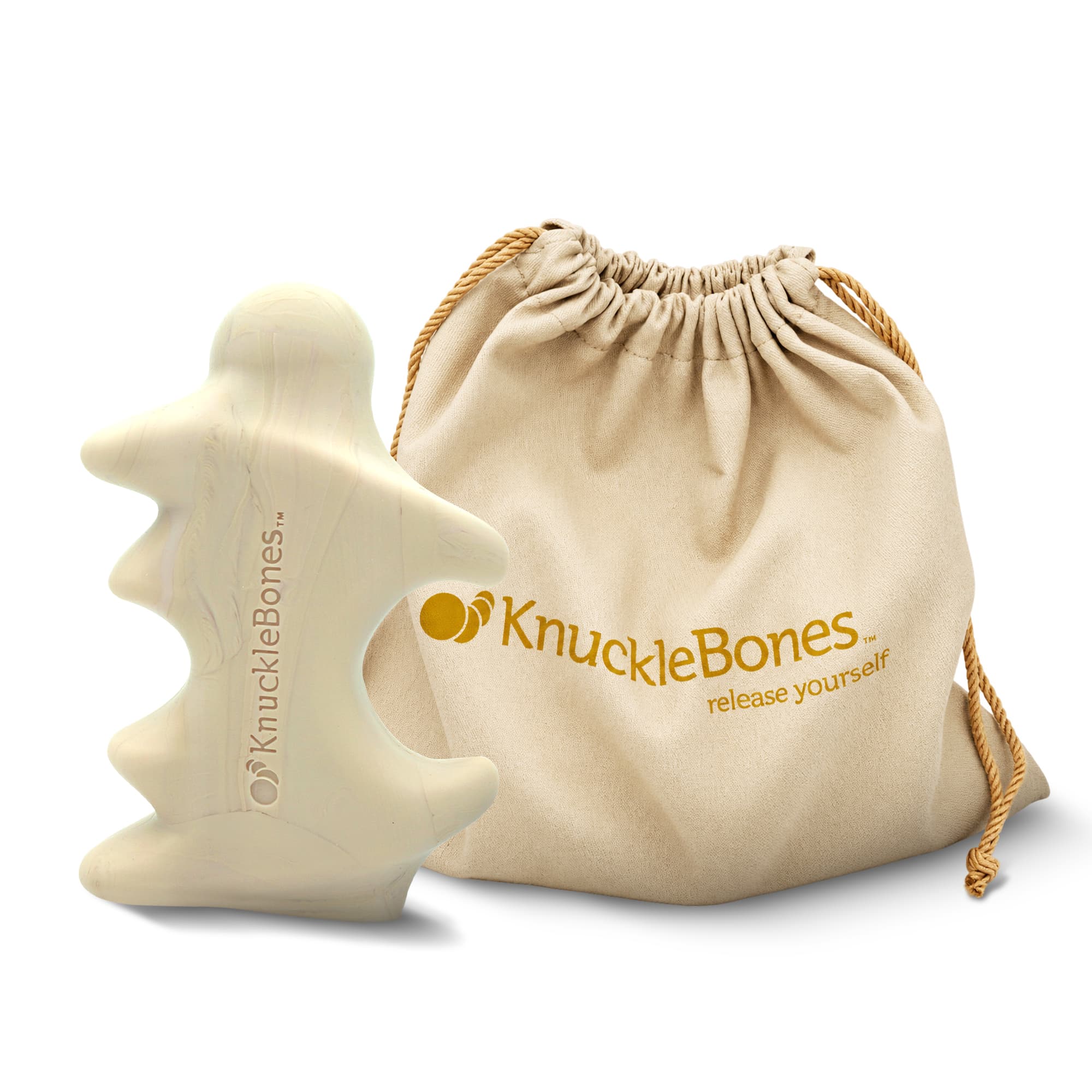
A tight feeling along the back of your thigh may cover a broad area rather than one distinct spot. The Knuckle surface offers broader contact, while the Elbow surface concentrates it. Keep contact on muscle, away from the sitting bone and the hollow behind the knee.
View step-by-step guideRecommended tool
How to use
Choose a comfortable, supported position and follow the setup for the area you are working on. Begin with light contact, keep the pressure comfortable and make sure you can release it easily. Take the pressure off before repositioning.
Support the Thigh
Sit securely on a stable chair or sofa with the leg supported and the knee in a comfortable position.
Identify the fleshy part of the back of the thigh. Stay away from the sitting bone, upper attachment area and the hollow behind the knee.
Use the tool by hand where you can reach comfortably, or support it beneath the thigh without trapping it against a hard seat edge.
Work in Small Sections
Begin with gentle hand pressure or let the leg settle gradually onto the supported tool. Adjust your position to control the pressure and make sure you can ease off easily.
Move over a small muscular section at a time rather than dragging the tool from the sitting bone to the knee.
Lift the tool or leg to release contact before moving. Stop for sharp pulling, bruising, tingling or pain travelling down the leg.
Use safely
Begin with light pressure and increase gradually only while it remains comfortable. Stop if you feel sharp or increasing pain, numbness, tingling, dizziness, or unusual weakness.
Common questions
No. Keep the leg supported and the knee in a comfortable position. Do not force the leg straight to increase the sensation.
Work over a small section of fleshy thigh muscle rather than making one long stroke. Keep contact away from the sitting bone, upper attachment area and hollow behind the knee.
Either option is included in the setup above: hand-held contact where you can reach comfortably, or a supported tool beneath the thigh. Choose the option you can control and release easily, without trapping the tool against a hard seat edge.
No. A lingering tight feeling does not tell you its cause or mean stronger pressure is needed. Keep the leg supported and contact comfortable rather than combining pressure with a forced stretch.
Related zones
Neck & base of skull
Explore neck and skull-base guidance
Upper traps & shoulders
Explore upper trap guidance
Back of arm & outer elbow
Explore arm and outer-elbow guidance
Mid-back
Explore mid-back guidance
Lower back
Explore lower-back guidance
Glutes & hips
Explore glute and hip guidance
Calves
Explore calf guidance