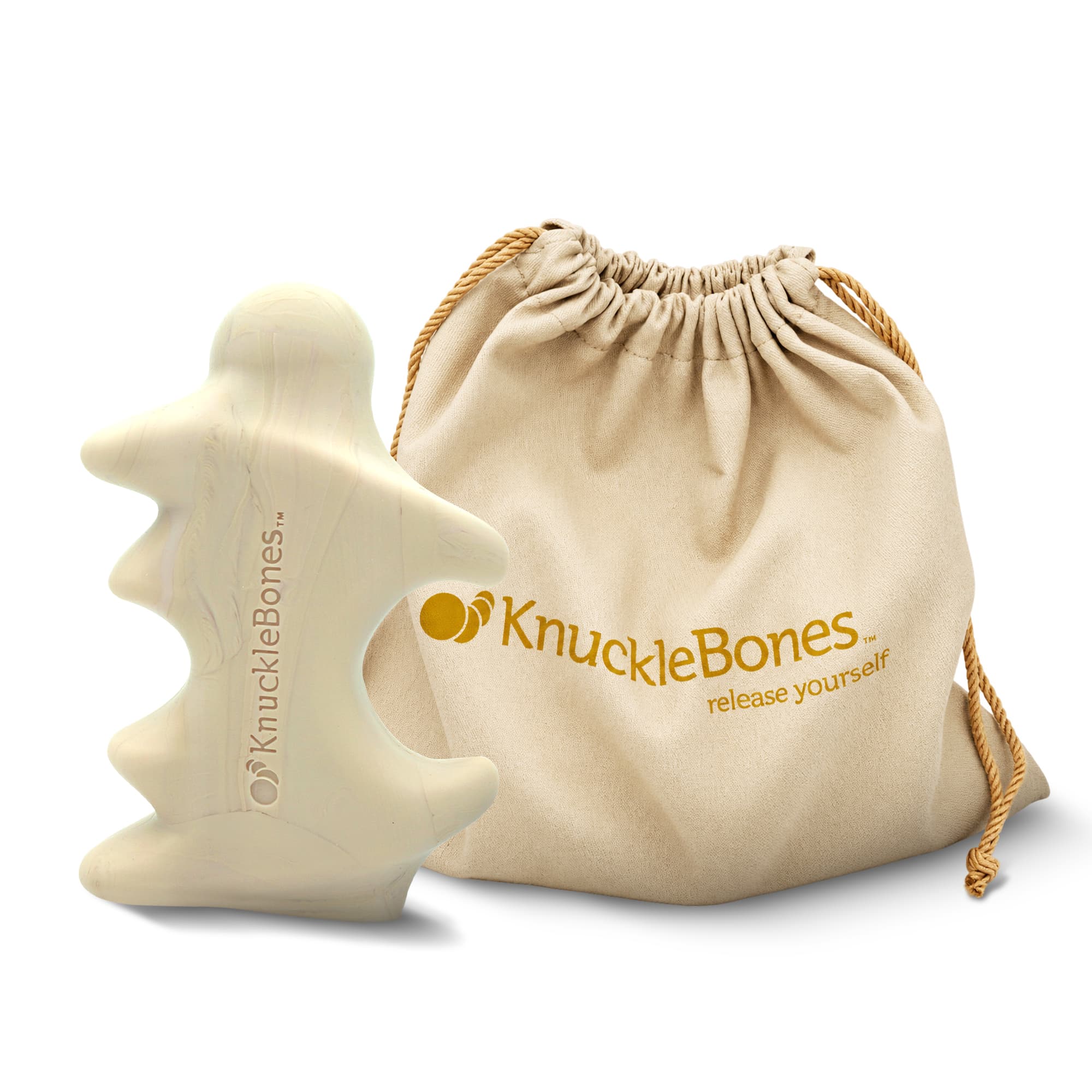
Practical use
Choose a supported position and keep contact on muscle.
Practical use
Choose a supported position and keep contact on muscle.
How it works
When the tops of your shoulders feel heavy or tight, you may find yourself rubbing the same area throughout the day. This guide introduces controlled self-massage around the upper-trap muscles, with supported and hand-held options rather than a push for deeper pressure.
Practical use
Choose a supported position and keep contact on muscle.
Practical use
Choose a supported position and keep contact on muscle.
Recommended pressure type
Best starting point for this zone.
A heavy, tight feeling across the tops of your shoulders may leave you wanting to rub the whole area or focus on one spot. Explore the different contact surfaces without treating greater depth as the goal. Keep contact on muscle and away from the neck, joints and bony edges.
View step-by-step guideHow to use
Choose a comfortable, supported position and follow the setup for the area you are working on. Begin with light contact, keep the pressure comfortable and make sure you can release it easily. Take the pressure off before repositioning.
Choose Your Setup
Use a stable chair or sofa with your feet supported. If using a desk chair, make sure it cannot roll or tip during use.
Identify the muscular area across the top and back of the shoulder. Keep clear of the neck, collarbone, shoulder joint and shoulder-blade edges.
Hold the tool in your opposite hand if you can reach comfortably. For a spot on the upper back, you can support it against the chair or sofa back only if it stays securely in place.
Control the Contact
Begin with gentle hand pressure or a small lean into the supported tool. Keep your neck relaxed and adjust the pressure gradually while it remains comfortable.
Keep brief, steady contact, or use short hand-held movements over the identified muscle. Avoid reaching or twisting to chase a spot.
Ease away before repositioning. Stop if discomfort increases or you notice pain travelling into the arm, tingling or numbness.
Use safely
Begin with light pressure and increase gradually only while it remains comfortable. Stop if you feel sharp or increasing pain, numbness, tingling, dizziness, or unusual weakness.
Common questions
Yes, where you can reach comfortably with your opposite hand. For an appropriate upper-back spot, supported contact against a stable chair or sofa back is another option. Avoid twisting or reaching awkwardly to chase a spot.
No. The upper traps extend across the top and back of the shoulders. The skull-base area is higher, at the back of the neck, and uses a different supported setup.
Explore neck & base of skullDo not treat self-massage as a posture-correction routine. A tight feeling after desk work does not establish its cause or mean you need deeper pressure.
No. Recurring tightness is not a signal to increase pressure. Keep contact comfortable rather than trying to force a lasting change, and seek advice if the problem persists or worsens.
Related zones