

Practical use
Keep lower-back contact controlled, supported and off the spine.
Practical use
Keep lower-back contact controlled, supported and off the spine.
How it works
A tight lower back can leave you shifting in your seat, looking for a more comfortable position. This guide focuses on supported contact around muscle, with pressure you can adjust, without pressing on the spine or trying to correct its alignment.
Practical use
Keep lower-back contact controlled, supported and off the spine.
Practical use
Keep lower-back contact controlled, supported and off the spine.
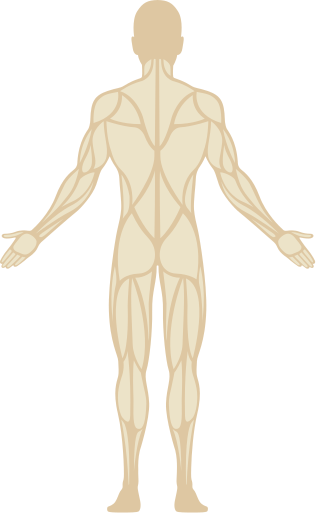
Recommended pressure type
Best starting point for this zone.
A tight lower back does not automatically need deep pressure. The contact surfaces offer different ways to reach the surrounding muscle, but comfort and control come first. Avoid direct pressure on the spine, lower ribs and hip bones, and do not use the tool to investigate unexplained back pain.
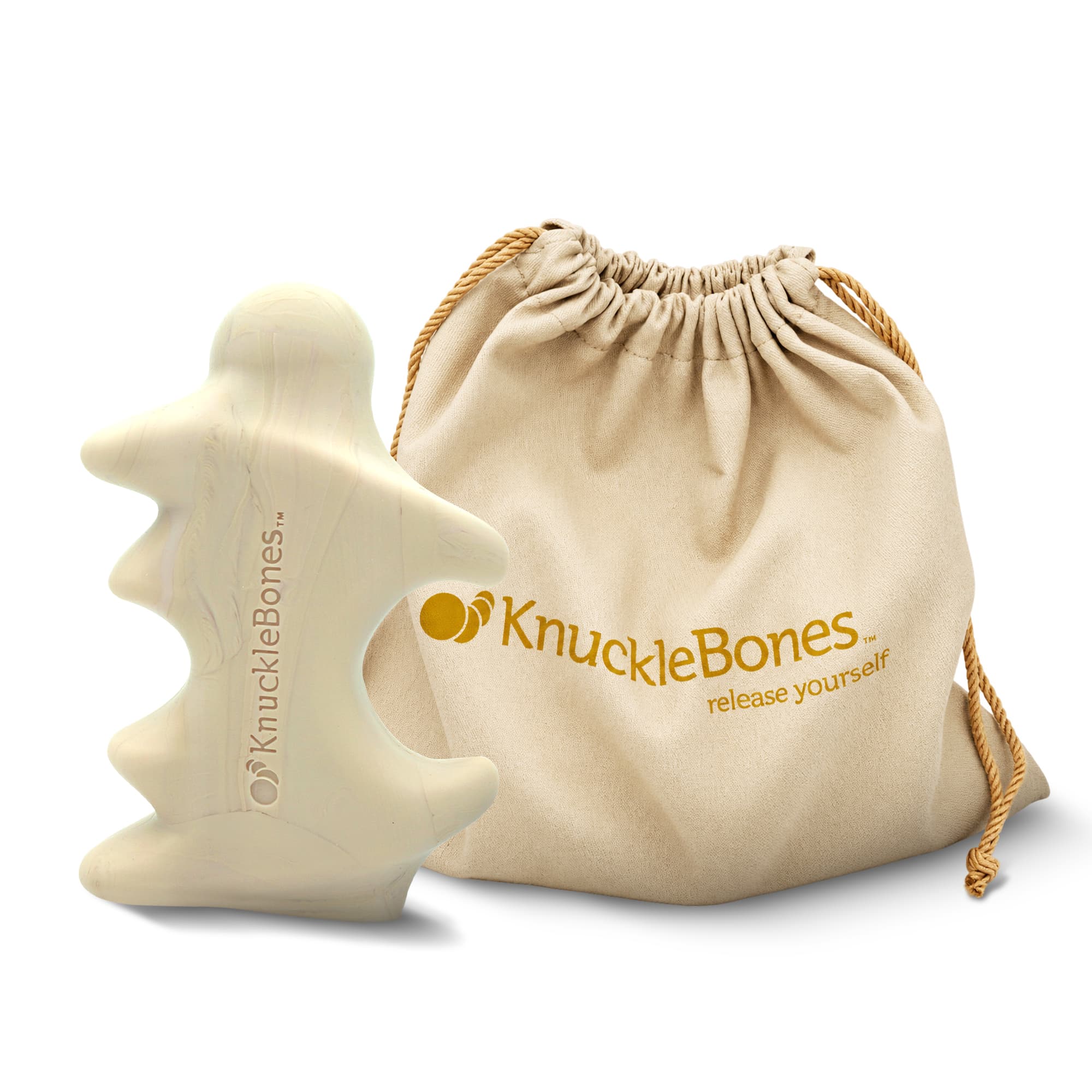
View step-by-step guideRecommended tool
How to use
Choose a comfortable, supported position and follow the setup for the area you are working on. Begin with light contact, keep the pressure comfortable and make sure you can release it easily. Take the pressure off before repositioning.
Find a Comfortable Position
Choose a stable chair or sofa and place both feet comfortably on the floor. Avoid twisting or arching your back to make contact.
Use your hand first to identify muscle beside the spine. Stay clear of the spine, lower ribs, hip bones and the flank below the ribs.
Support the tool against the backrest only if you can keep its contact on the identified muscle. Do not assume both points must contact your back at once.
Keep the Pressure Manageable
Begin with a small lean and gradually adjust how much weight rests against the tool. Keep the pressure comfortable, avoid arching your lower back, and make sure you can ease away easily.
Ease forward and reassess rather than holding through discomfort. Stop if the setup makes your back feel worse.
Do not continue if pain travels into a leg or you develop tingling, numbness or weakness. Seek medical advice for new, persistent or unexplained back pain.
Use safely
Begin with light pressure and increase gradually only while it remains comfortable. Stop if you feel sharp or increasing pain, numbness, tingling, dizziness, or unusual weakness.
Common questions
No. Contact stays on identified muscle beside the spine. Do not press on the vertebrae or use the tool to arch your back or try to change its alignment.
No. Prioritise a stable setup and comfortable contact on the identified muscle. Do not force a symmetrical fit or allow another part of the tool to press onto bone.
Stop rather than using pressure to work through it. Pain travelling into a leg, tingling, numbness or weakness needs medical advice rather than a stronger self-massage approach.
Related zones
Neck & base of skull
Explore neck and skull-base guidance
Upper traps & shoulders
Explore upper trap guidance
Back of arm & outer elbow
Explore arm and outer-elbow guidance
Mid-back
Explore mid-back guidance
Glutes & hips
Explore glute and hip guidance
Hamstrings
Explore hamstring guidance
Calves
Explore calf guidance